This was not a carefully researched Bruges itinerary. I was there for work, had been awake since two in the morning, worked all day and spent the evening fulfilling more obligations in Ypres.
By the time I reached my hotel beside Bruges station, I was physically too tired to go sightseeing. I also had a 07:58 train to catch the next morning.
The sensible conclusion would have been that Bruges was simply not happening.
Instead, I went to sleep and set an alarm for four in the morning.
Not quite the entrance I expected
It was about a twenty-minute walk from my hotel to the old town. Just as I was entering it, I found someone unconscious on the street.
I called an ambulance and waited until the police and paramedics arrived. It was a serious beginning to what I had imagined would be a quiet little wander, and it made me considerably more alert before I continued.
After that, there was almost nobody. A cyclist. Someone on a scooter. A delivery driver. Perhaps one or two other people moving through the darkness with actual reasons to be awake.
Otherwise, Bruges was mine.
Bruges in the dark
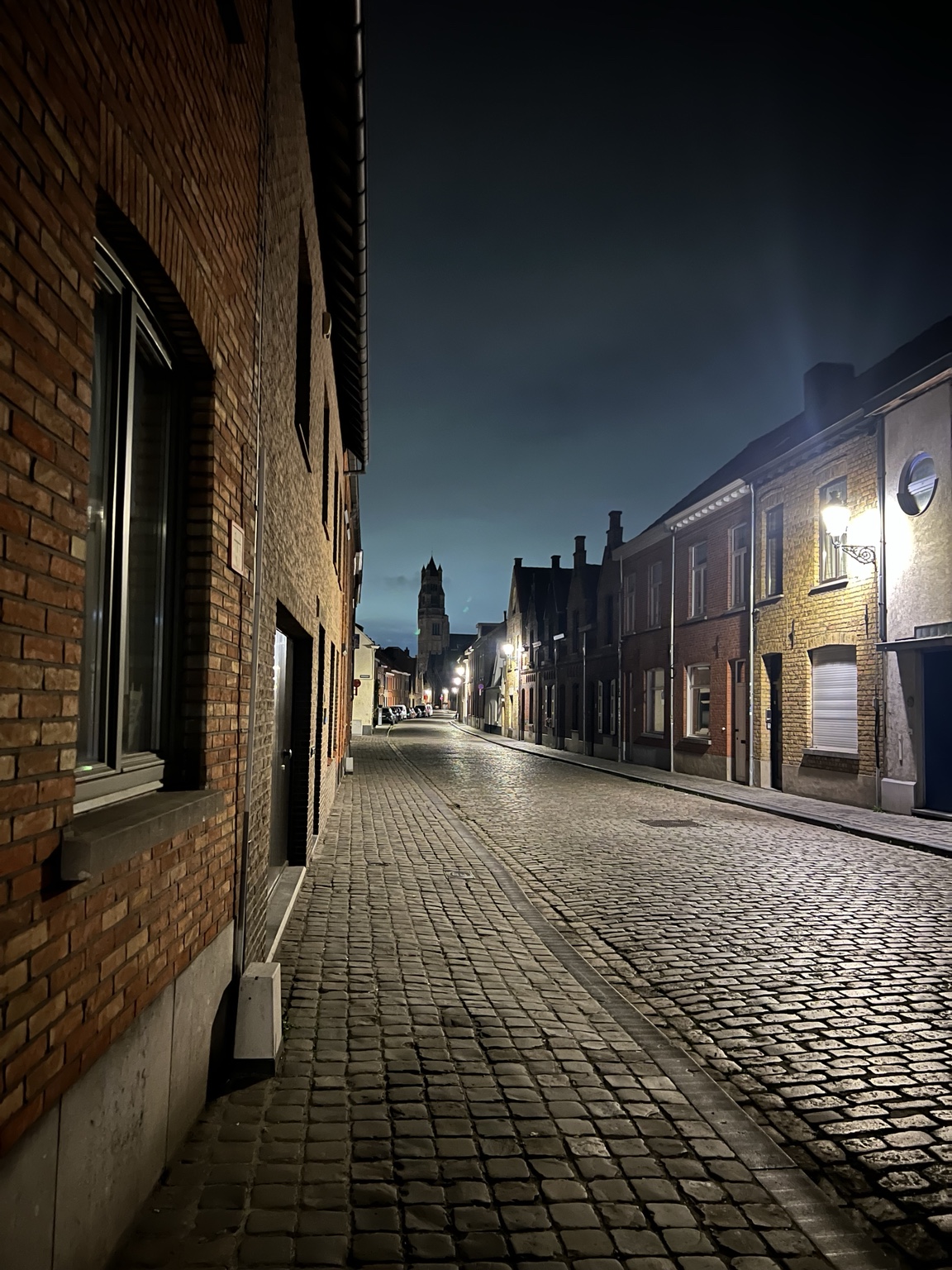
I was surprised by how dark the old city actually was. My reference point is old Riga, where towers and important buildings tend to be floodlit. Bruges seemed much more selective about lighting.
At first, that darkness was slightly unsettling. I was alone in a city famous for crowds, but I could barely see some of the canals beside me. Occasionally I heard a splash in the pitch black.
Probably ducks.
Hopefully ducks.
The longer I walked, the more comfortable I felt. The absence of crowds stopped feeling strange and began to feel like an extraordinary privilege. There were no bodies between me and the buildings, nobody passing through a photograph, and no pressure to keep moving because I was blocking somebody else.
I could simply stand and look.
When the camera could see more than I could
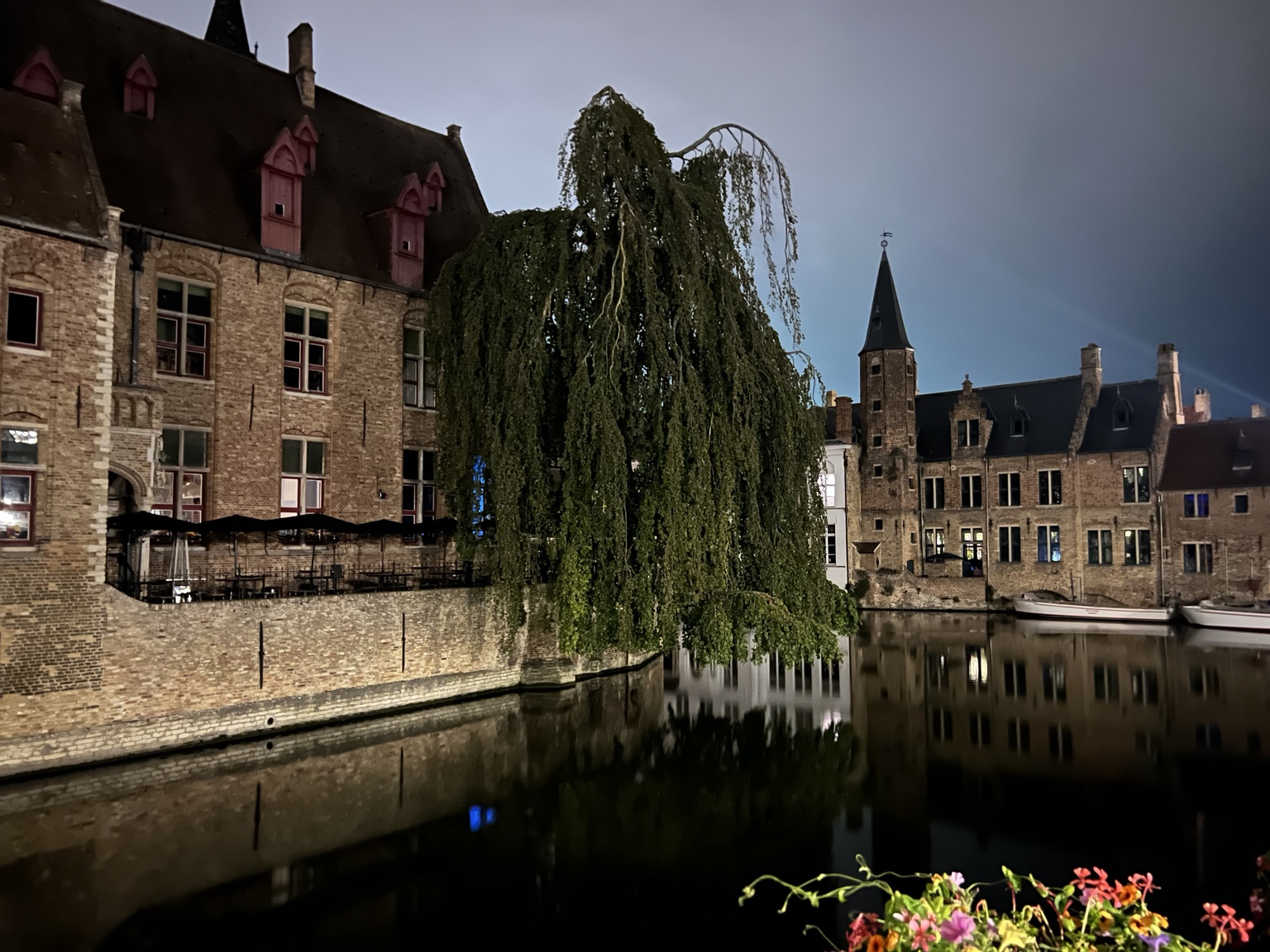
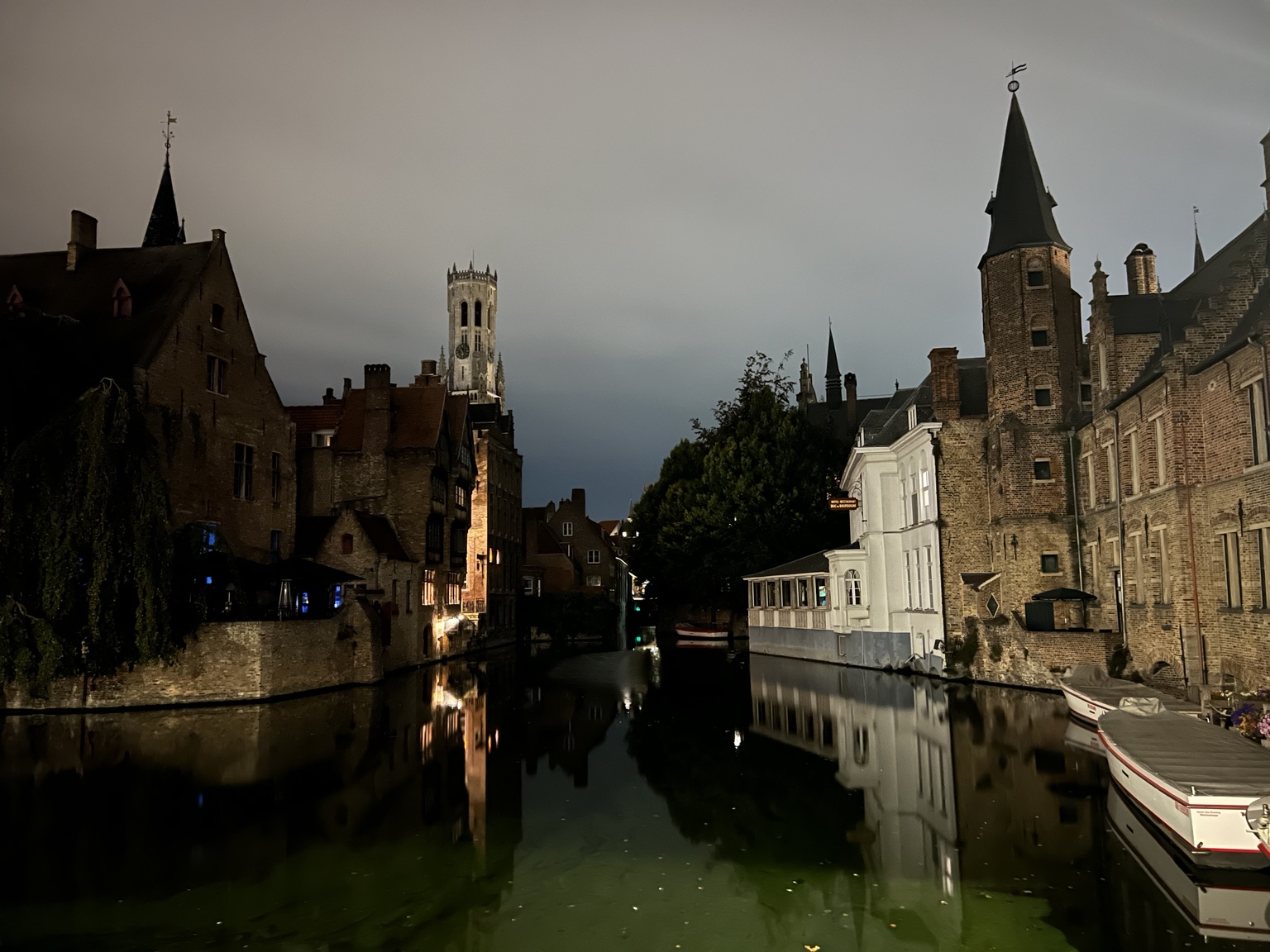
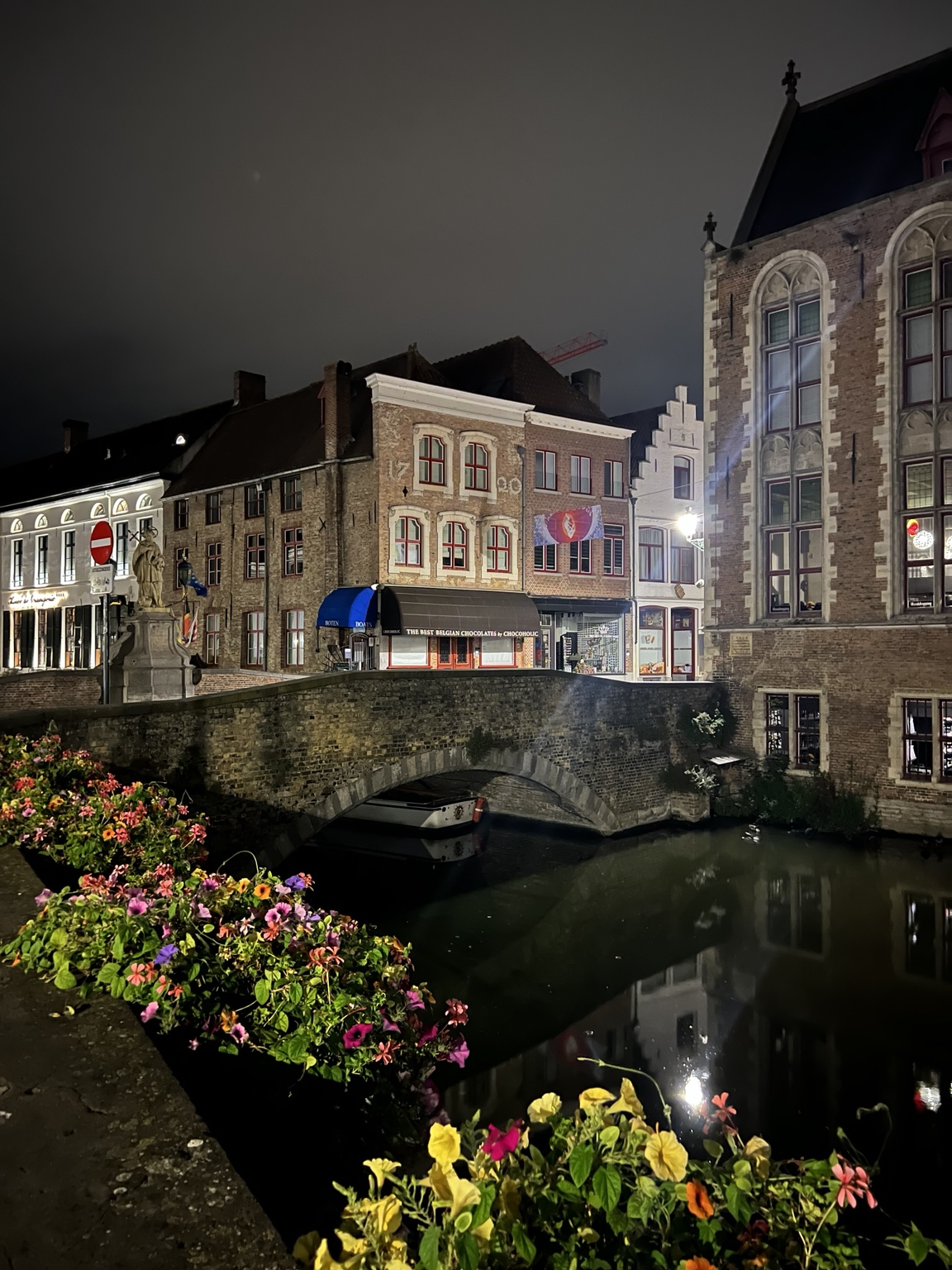
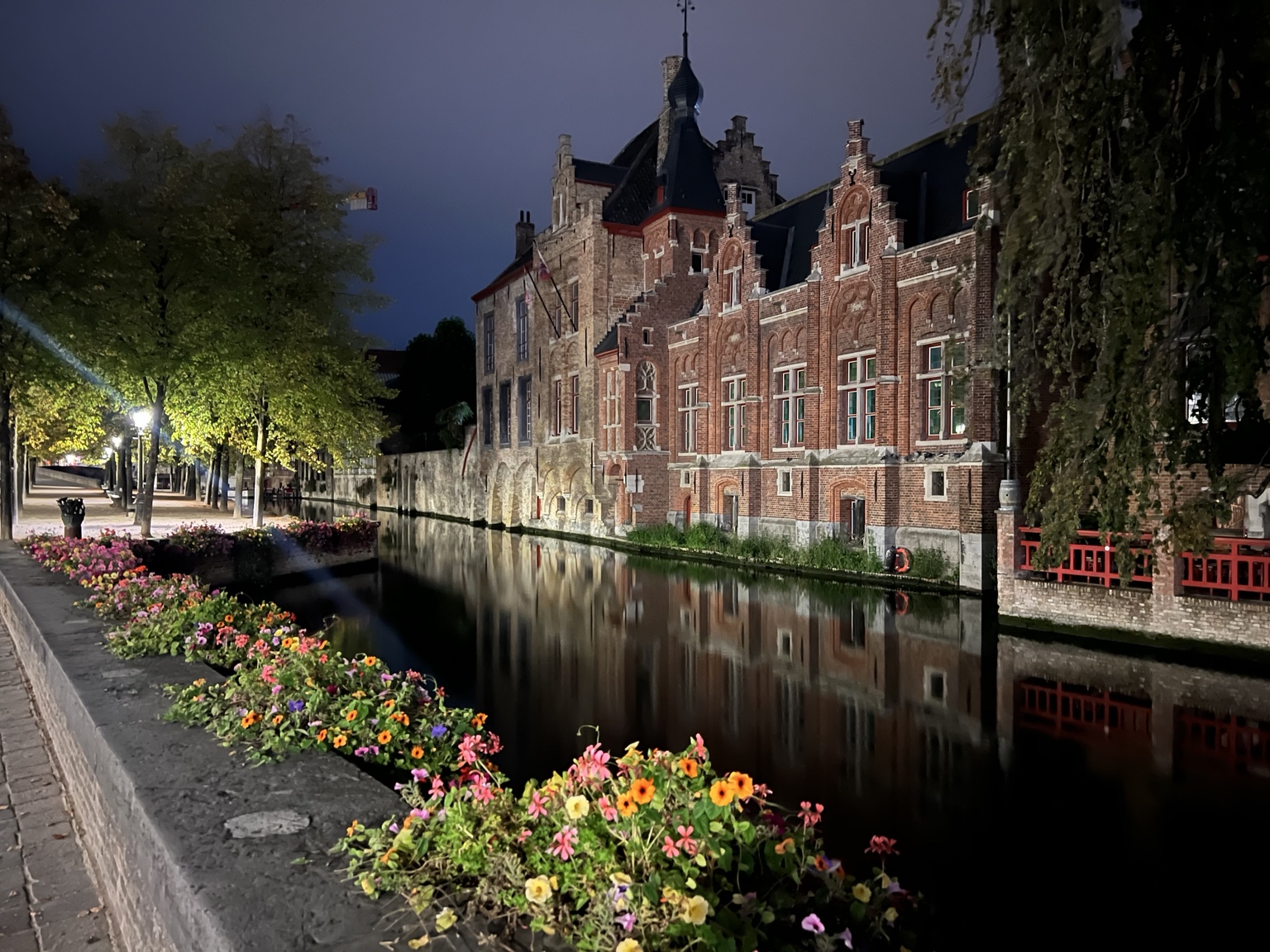
Some canals were so dark that, with my own eyes, I could see little more than blackness. Then I would point my phone camera into it, take a photograph, and the screen would reveal reflections, old houses, trees and entire scenes that had been hiding from me.
“Okay. Oh wow. So that was hiding in there.”
It became part of the walk: following shapes, reflections and streets without always knowing exactly what I would find. Bruges has famous attractions, of course, but at that hour the city itself was the attraction—its cobbles, water, roofs, towers and the occasional flower box emerging from the dark.
A small gothic incident
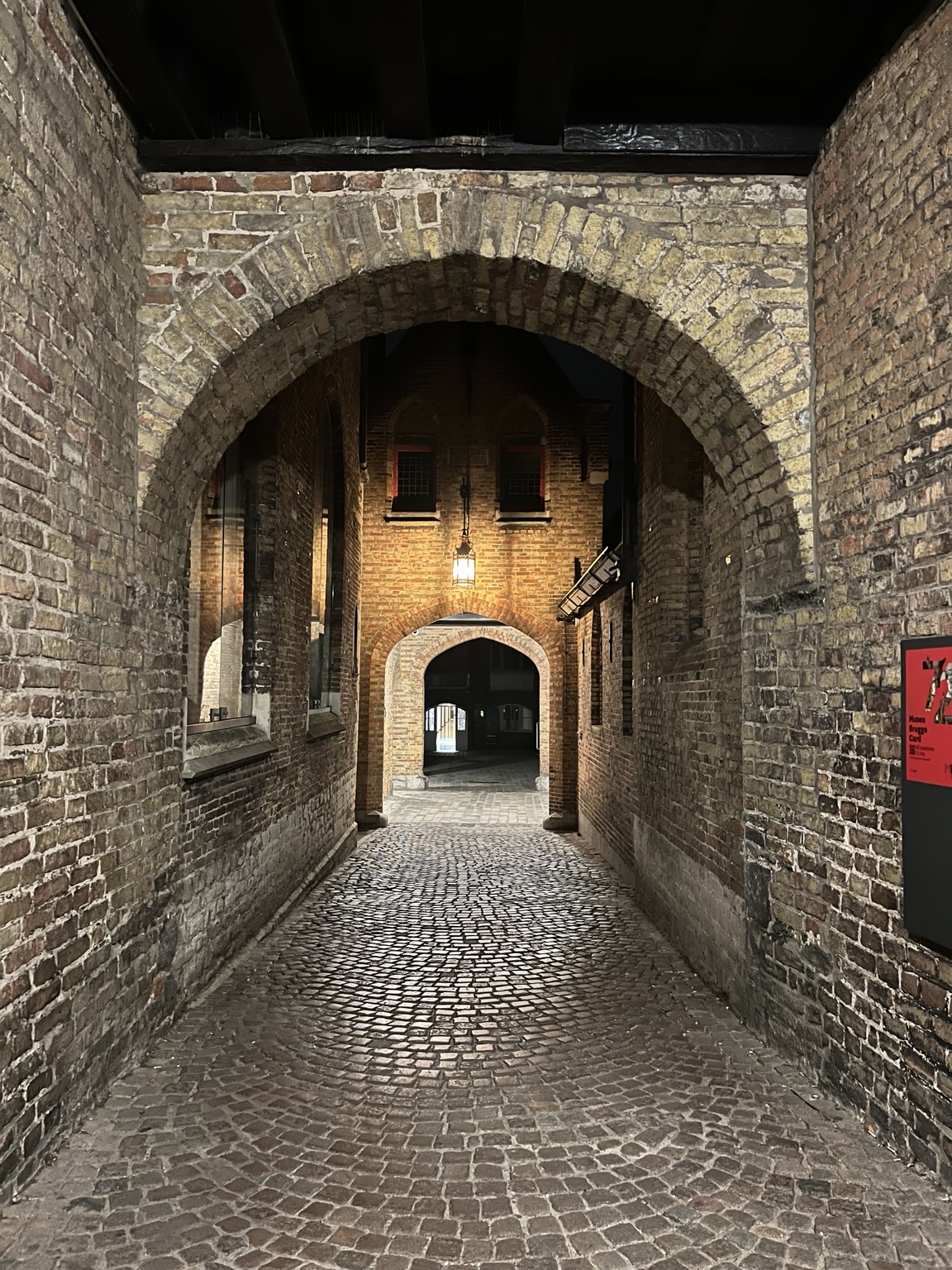
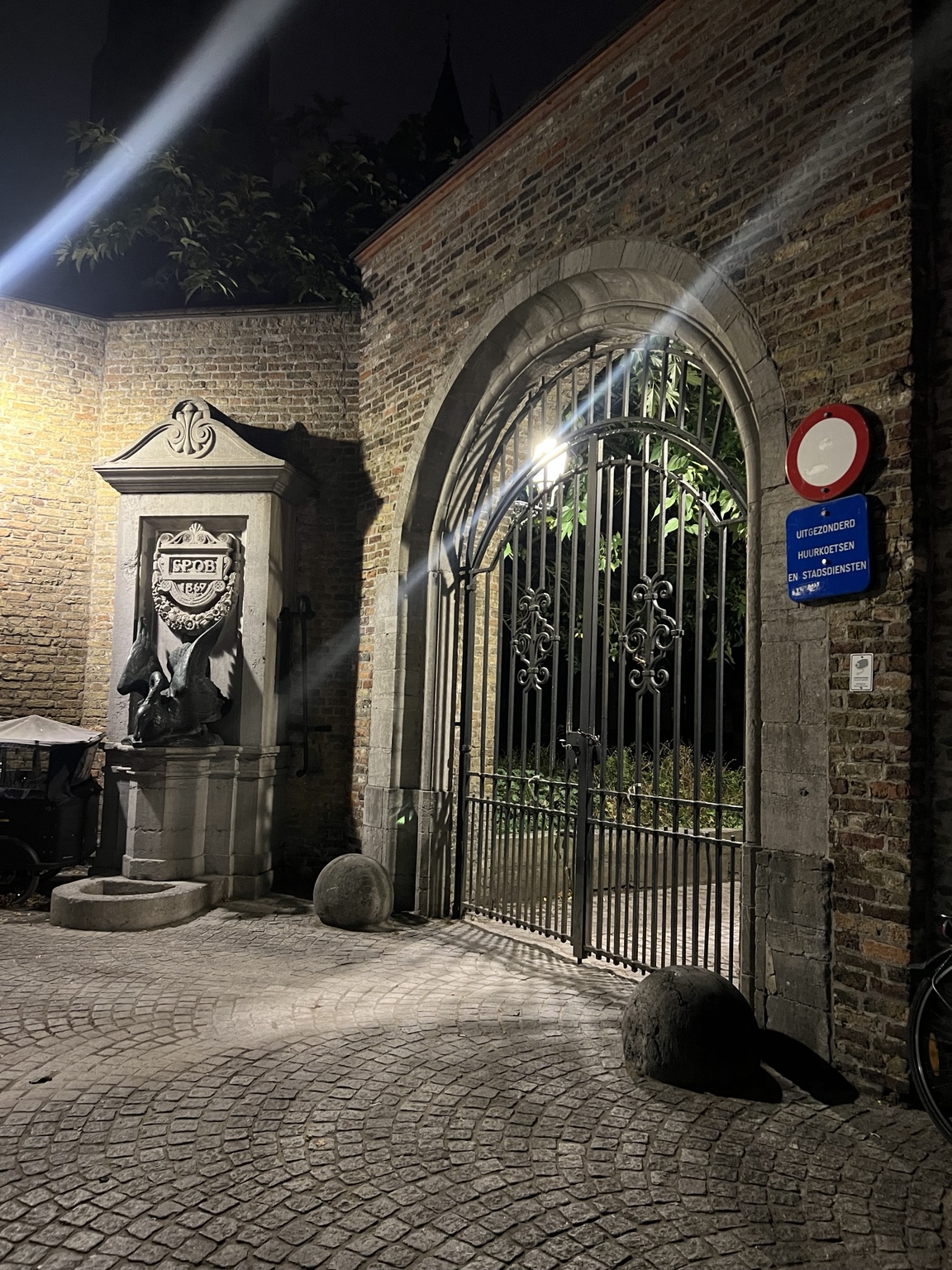
At one point I wandered into the courtyard of Sint-Janshospitaal, the medieval hospital. I was alone, taking photographs and looking at the buildings, when a gate creaked closed behind me.
Nope. I left.
I have watched enough films to know when a pleasant European city is trying to begin a ghost story, and I did not have time for one before breakfast.
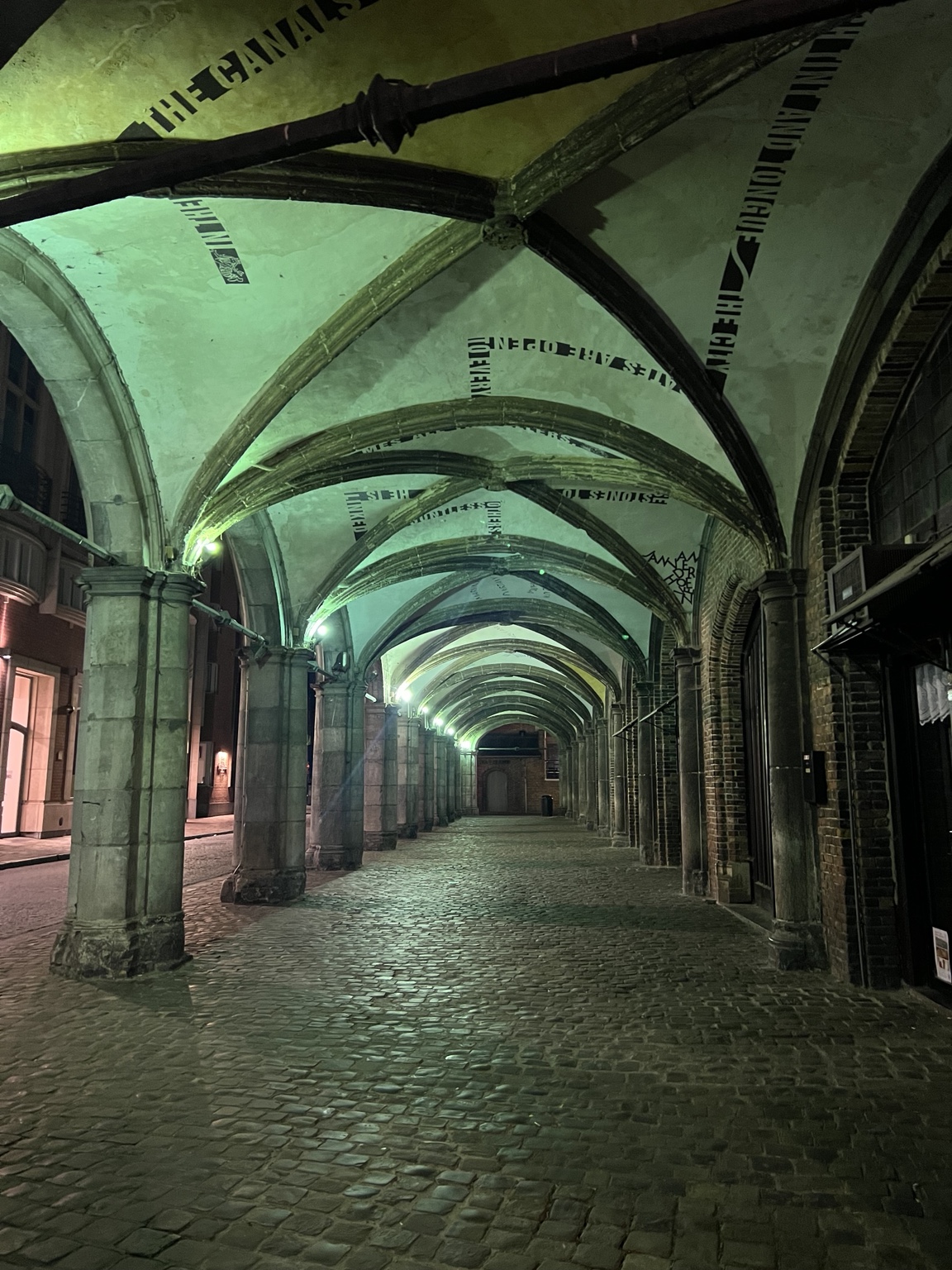
I also tried to reach the Boniface Bridge, but the gates into that area were locked. The information I found said they opened at seven, by which point I needed to be checking out rather than arranging a romantic meeting with a bridge.
If you ever plan your own night-time or dawn walk, check the current access hours. Some of the loveliest corners sit inside gated courtyards and church grounds.
I did not reach the bridge. I survived the haunted courtyard. I consider the exchange acceptable.
Standing alone in the Markt
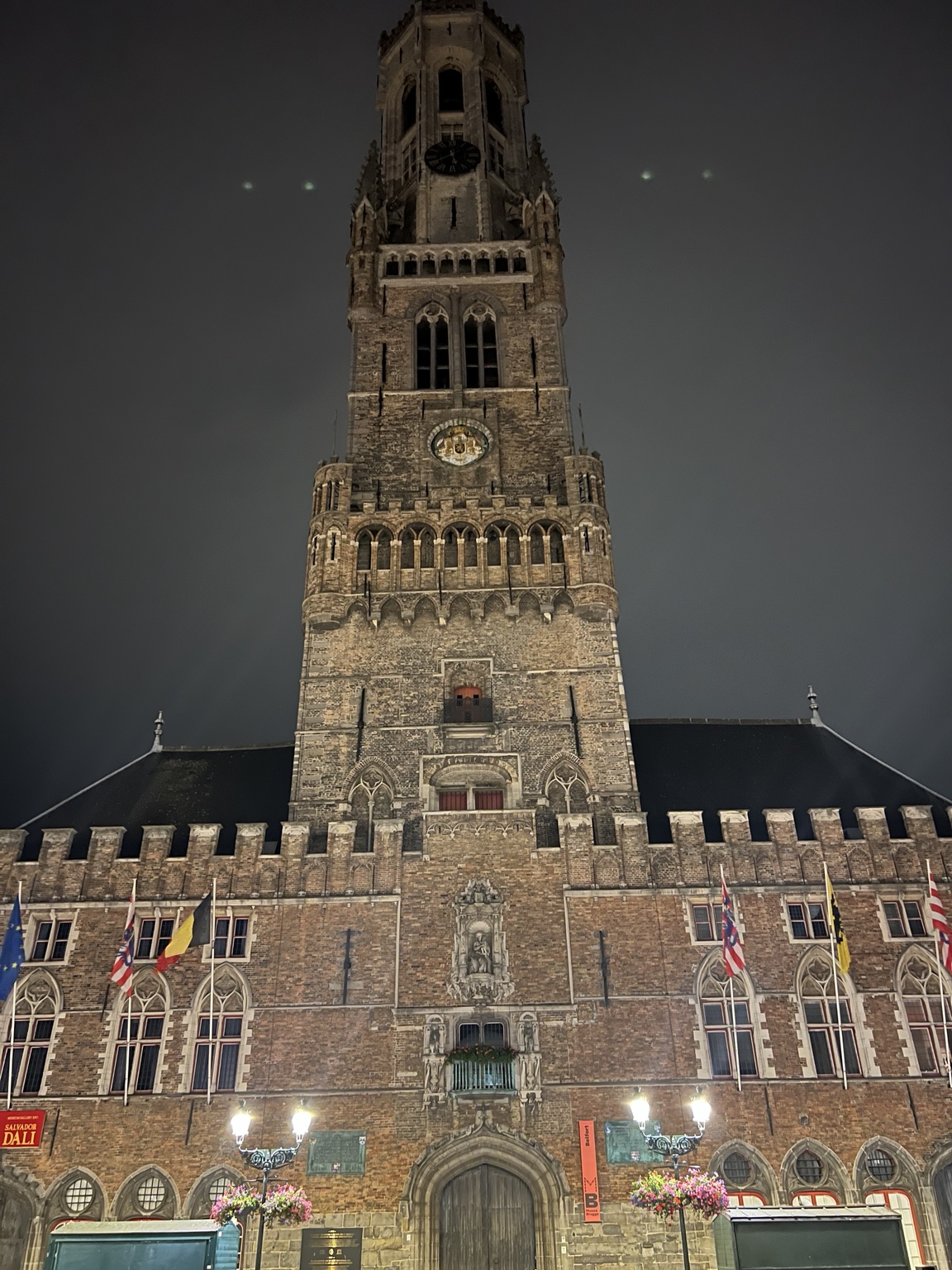
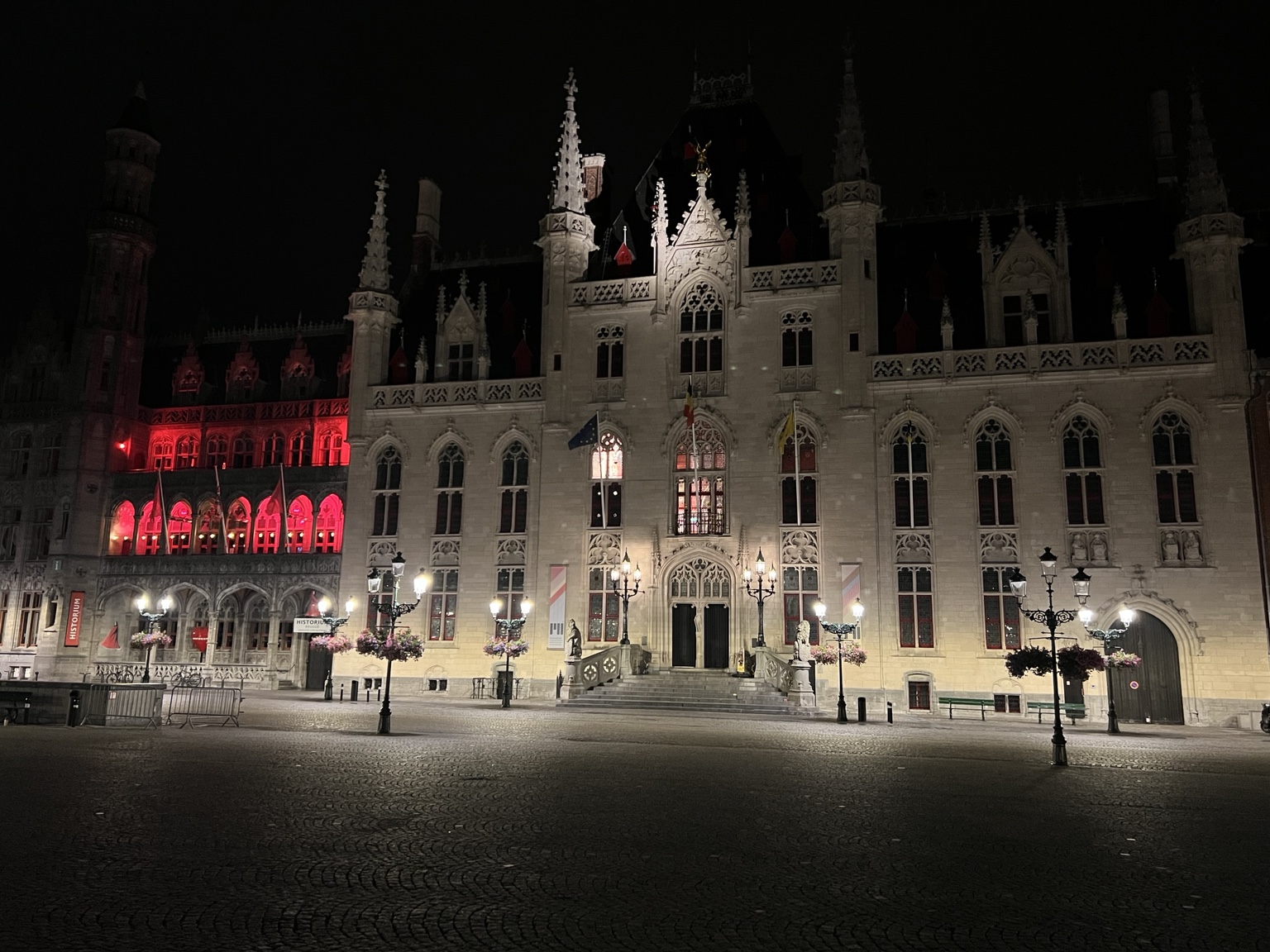
Eventually I reached the Markt and looked up at the Belfry—the building I recognised instantly from In Bruges and now feel obliged to rewatch.
The square was almost entirely empty.
I remember standing there, turning slowly to look at those grand buildings and thinking:
Oh my fucking God. I’m here completely on my own.
That was the moment the ridiculous alarm became worth it.
Solitude changes how you pay attention to a place. With no crowds to navigate, I noticed individual façades, windows, silhouettes and the amount of space around me. The darkness that had made me cautious at the beginning now felt less like something to fear and more like part of the city I had been allowed to see.
The city begins to wake
After about 05:20, the sky began to change. It was still dark, but the black softened into grey and the cloudy, occasionally misty morning started to show itself.
More people appeared. A few more cars. Deliveries began. At one point I saw a truck arrive and two men in high-visibility vests appeared to be picking the lock of a restaurant.
I assumed they were doing exactly what they were meant to be doing.
Fingers crossed.
By six, buses were moving through town and a rubbish truck was getting on with the deeply unromantic business of keeping a beautiful city clean.
The spell was not broken exactly. It just changed. Bruges was no longer sleeping; it was stretching, switching on lights and preparing to become the Bruges everyone else would see.
Breakfast, checkout and the 07:58 train
Around six, I ran out of time and made a brisk return to the hotel.
I reached breakfast, piled my plate high with omelette and salmon—the superior staples of a continental hotel breakfast, because who makes omelettes like hotels do?—checked out and caught my train.
Everything went suspiciously smoothly for a morning that had begun with an ambulance and included a possible restaurant break-in.
Two hours were enough to remember
I did not climb the Belfry. I did not take a boat trip, enter a museum or conduct a serious investigation into Belgian waffles.
And yet I did not feel as if I had missed Bruges.
I saw a dark, misty, occasionally spooky version of it that was slowly waking around me. Two hours were enough to leave me with a vivid sense of the place precisely because they were so unlike the normal way of seeing it.
This story belongs beyond the tent, but it felt strangely connected to solo camping. There was the same first moment of being intensely aware that I was alone, the same heightened attention to unfamiliar sounds, the same practical consideration of safety and the same gradual shift into trusting my own instincts and enjoying the space.
There was no tent, no hammock and no coffee under pine trees. Just a sleeping city, a cloudy September morning and a pocket of time I nearly decided was too small to use.
It was enough.